Landlord insurance for Missouri rental property: what you need to know
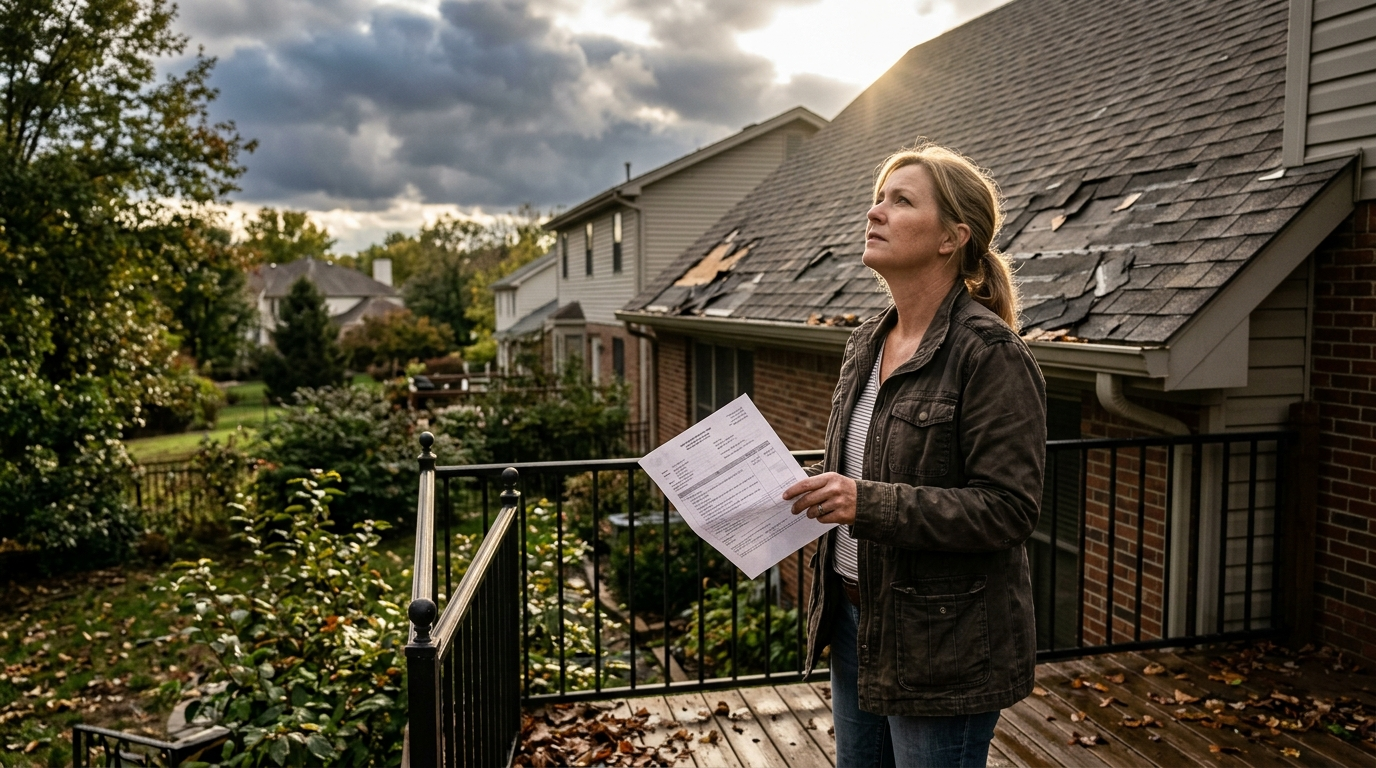
If you own a rental property in Missouri, landlord insurance for your Missouri rental property is one of those things that looks optional until the moment it isn't. A tenant leaves a bathtub running, a severe hailstorm tears through the Kansas City metro, or someone slips on an icy sidewalk and files a lawsuit. Any one of those events can wipe out years of rental income if you have the wrong policy or no policy at all. This post covers what landlord insurance includes, what it costs in Missouri, and the gaps most rental property owners don't discover until they file a claim.
Why a standard homeowners policy won't protect a rental
This is the mistake that catches landlords off guard most often. When you move out of a property and start collecting rent, your standard homeowners policy almost always stops covering it. Insurers write homeowners policies on the assumption that the named insured lives in the home and has a personal stake in its upkeep. Once you hand keys to a tenant, that assumption no longer holds.
A homeowners carrier that discovers your property is tenant-occupied can deny a claim outright, even if the damage has nothing to do with the tenancy. Missouri courts have consistently upheld those denials because the policy language is clear. If you still own the property as your primary residence but rent out part of it, talk to an agent about endorsements. If the entire property is rented, you need a dedicated landlord policy.
It's also worth reading our breakdown of dwelling fire insurance vs. homeowners in Missouri if you're weighing your options for a single-family rental. The differences in how each policy handles tenant-caused damage, liability, and loss of rents are significant.
What landlord insurance actually covers
A solid Missouri landlord insurance policy typically bundles three core protections. Understanding each one helps you identify where your coverage gaps might be.
Dwelling coverage
This covers the physical structure of the rental: the walls, roof, attached garage, built-in appliances, and other permanent fixtures. Damage from fire, lightning, windstorms, hail, vandalism, and most forms of sudden water damage falls under a standard policy. Missouri weather makes windstorm and hail coverage non-negotiable. The Kansas City area averages multiple severe storm events per year, and parts of the state fall within the elevated-risk corridor that stretches toward the Gulf.
The number that matters most here is your replacement cost vs. actual cash value election. Replacement cost pays to rebuild at today's construction prices. Actual cash value deducts depreciation, which can leave you tens of thousands short on a partial loss. On an older rental, that gap is significant.
Liability coverage
If a tenant or their guest is injured on your property and sues you, liability coverage pays your legal defense and any judgment up to your policy limit. Missouri landlords face personal injury claims, dog bite claims from tenant pets, and premises liability suits more often than most people expect. A standard landlord policy carries $100,000 to $300,000 in liability limits, but many property owners with significant assets or multiple rentals add a personal umbrella policy on top to extend that protection to $1 million or more.
Loss of rents coverage
If your rental becomes uninhabitable after a covered loss, this pays the rental income you would have collected during the repair period. Without it, you're still paying your mortgage, property taxes, and insurance premiums on a property producing zero income. Most policies cap loss of rents at 12 months, but longer periods are available for larger or more complex properties.
Other structures and personal property
Detached garages, fences, and sheds typically fall under "other structures" coverage. This only covers your property as the landlord. Tenants' personal belongings are their responsibility, which is why you should always encourage or require renters to carry their own policy. Missouri renters insurance is inexpensive, and a tenant who has it is far less likely to come after you for damaged belongings after a loss.
What Missouri landlord insurance does not cover
Knowing the exclusions matters as much as knowing the inclusions. These are the most common gaps that trip up Missouri rental property owners .
- Flood damage. Standard landlord policies exclude rising water entirely. Flood coverage requires a separate policy, either through the National Flood Insurance Program (NFIP) or a private flood carrier. Missouri has significant flood risk along the Missouri River, the Mississippi, and their tributaries. If your rental sits in or near a floodplain, this is not optional.
- Earthquake damage. Missouri sits near the New Madrid Seismic Zone, one of the most active fault systems in the continental United States. A major seismic event in this region could affect properties hundreds of miles away, yet standard policies exclude earthquake damage entirely. See our post on earthquake insurance and the New Madrid fault for context on the actual risk.
- Tenant-caused intentional damage. If a tenant deliberately destroys the property, many standard landlord policies limit or exclude coverage. Some carriers offer a "malicious damage by tenant" endorsement. Ask specifically about it.
- Routine maintenance and wear. A roof that fails because it's 25 years old is not a covered loss. Landlord insurance covers sudden, accidental damage, not gradual deterioration.
- Vacant property. If your rental sits empty for 30 to 60 consecutive days (the threshold varies by carrier), your policy may suspend or limit coverage. Vacant property carries different risk characteristics, and insurers treat it accordingly. If you're between tenants for an extended period, look at a vacant property policy to bridge the gap.
What landlord insurance costs in Missouri
Missouri landlord insurance premiums vary depending on the property's location, age, construction type, and the coverage limits you choose. Rough benchmarks help set expectations.
For a single-family rental in the Kansas City metro, a standard landlord policy with $200,000 in dwelling coverage, $300,000 in liability, and loss of rents typically runs between $900 and $1,500 per year . Older homes, wood-frame construction, or high-crime ZIP codes tend to land at the higher end. Newer construction in lower-risk areas can come in below that range.
Multi-unit properties are underwritten differently and priced per unit or on total insured value, so the per-unit cost generally decreases as you scale. A duplex or four-plex may feel expensive compared to a single-family home, but the per-door cost is often lower than insuring the same number of single-family rentals separately.
A few factors Missouri landlords can control to keep premiums reasonable:
- Central station monitoring. A monitored fire and burglar alarm system typically earns a discount of 5 to 15 percent depending on the carrier.
- Updated systems. Properties with newer roofing, updated electrical (no knob-and-tube or Federal Pacific panels), and modern plumbing pay less.
- Higher deductibles. Moving from a $1,000 to a $2,500 deductible on the dwelling can reduce your annual premium meaningfully. Make sure the deductible is a number you can cover out of pocket.
- Bundling policies. If you have multiple rentals or carry other personal lines with the same carrier, bundling often produces a discount. An independent agent can structure this across multiple carriers if one carrier doesn't write all your properties.
Missouri-specific rules landlords should understand
Missouri does not require landlords to carry insurance by state law. No statute mandates a minimum level of property or liability coverage the way auto insurance is mandated for drivers. That does not mean you're off the hook, though.
If your rental property carries a mortgage, your lender almost certainly requires hazard insurance as a condition of the loan. The lender's requirement typically specifies a minimum dwelling coverage amount (usually replacement cost value) and names the lender as a loss payee. If you let coverage lapse, the lender has the right to force-place insurance at your expense, and force-placed coverage is expensive. It also protects only the lender's interest, not yours.
Missouri's landlord-tenant law (Chapter 535 of the Revised Statutes of Missouri) creates implied habitability standards. If a fire or flood makes a unit uninhabitable, you as the landlord have legal obligations around repairs and tenant notice. Loss of rents coverage is what makes you financially capable of meeting those obligations without missing mortgage payments while the unit is being repaired.
If you own rental property and haven't reviewed your lease or your insurance setup recently, our post on five rules every landlord should live by is worth ten minutes of your time.
Short-term rentals and the coverage problem
If you list a property on Airbnb, Vrbo, or a similar platform, standard landlord insurance may not cover you. Platform host protection programs like Airbnb's Host Guarantee are not insurance policies. They have exclusions, claim limits, and dispute processes that leave hosts with serious gaps. A short-term rental that generates $2,000 a month in income deserves a policy designed for that use. Ask specifically about short-term rental insurance as a standalone product or endorsement. Some carriers write it; many don't, which is another reason to work with an independent agent who can shop the market.
Get the right coverage from Prime Insurance Agency
At Prime Insurance Agency , we're an independent agency, which means we shop multiple carriers on your behalf rather than steering you toward one company's product. For Missouri rental property owners , that independence matters because not every carrier writes landlord policies in every part of the state, pricing varies significantly across companies for identical properties, and the endorsements available for flood, earthquake, tenant malicious damage, and short-term rental use differ from one carrier to the next.
Whether you own one rental house in Liberty or a portfolio of properties across the Kansas City metro, we can compare options and build a policy that matches your actual exposure. We're local, so we understand the weather patterns, the building stock, and the markets our clients operate in.
Ready to get coverage in place or review what you already have? Call us at (816) 479-0595 or request a landlord insurance quote online. It takes a few minutes, and it could make a very big difference if something goes wrong.