What mobile home insurance in Missouri actually covers
Mobile home insurance in Missouri is not the same as a standard homeowners policy, and that gap catches a lot of people off guard when a storm rolls through or a fire breaks out. If you own a manufactured or mobile home and have assumed your coverage works the same way as a site-built house, there is a good chance you are underinsured in ways you would not discover until you file a claim. This post breaks down what a proper mobile home policy covers, what gets left out, and why Missouri's weather patterns and local regulations make the right coverage especially important here.
Why mobile homes need their own policy type
Standard homeowners policies are underwritten for site-built, permanently attached structures. Mobile and manufactured homes are built differently, priced differently, and they depreciate differently. Insurers treat them as a separate risk category, which means they require their own policy form, often called an HO-7 or a manufactured home policy.
A few things make mobile homes a distinct risk in the eyes of underwriters:
- Construction method. Mobile homes are built on a steel chassis and assembled in a factory, which changes how they respond to wind, fire, and water intrusion compared to stick-built homes.
- Tie-down and anchoring requirements. Missouri follows HUD standards for manufactured home installation. If your home is not properly anchored, a carrier can deny a wind or tornado claim.
- Age and depreciation. Homes built before the 1976 HUD Code went into effect are considered pre-HUD and are much harder to insure at replacement cost. Many carriers will only offer actual cash value (ACV) on older units.
- Location type. Whether your home sits on your own land, in a community park, or on a rented lot affects what coverage options are available and how liability is structured.
None of these factors surface when you run a quote through a standard homeowners platform. You need a policy designed for the way your home was actually built and where it actually sits.
The coverage pieces a solid mobile home policy includes
When written correctly, a manufactured home policy covers most of the same categories as a homeowners policy. Here is what to look for in each section:
Dwelling coverage (Coverage A)
This pays to repair or rebuild the home itself after a covered loss. The number that matters most is whether you have replacement cost value (RCV) or actual cash value (ACV) . RCV pays what it would cost to rebuild today. ACV deducts depreciation, which can leave you tens of thousands of dollars short on a newer home and far more on an older one. Push for RCV if your home qualifies; not all carriers offer it on homes older than 15 to 20 years.
Other structures
Carports, storage sheds, decks, and fences attached to or near the home are generally covered here. If you have added a significant structure, make sure the limit is high enough to actually replace it.
Personal property
Your furniture, appliances, clothing, and electronics are covered under personal property. Check whether this is also RCV or ACV. ACV on a five-year-old television pays you next to nothing. Some carriers automatically apply ACV to personal property even when the dwelling is written at RCV, so read the declarations page carefully.
Loss of use
If a covered loss makes your home uninhabitable, loss of use (sometimes called additional living expenses) pays for a hotel, short-term rental, and meals above your normal costs while repairs are made. For mobile home owners who may have fewer comparable housing options locally, this benefit is worth having at a meaningful limit.
Liability coverage
If someone is injured on your property and sues you, liability coverage pays for your legal defense and any settlement up to the policy limit. $100,000 is the common floor, but $300,000 is a smarter starting point for most families. If you want more protection above that, a personal umbrella policy can add another $1 million or more in coverage for a relatively modest premium.
Medical payments to others
This is a smaller, no-fault coverage (typically $1,000 to $5,000 ) that pays a guest's medical bills if they are hurt on your property, regardless of fault. It keeps minor injuries from turning into lawsuits.
What standard mobile home policies commonly miss
Several significant risks are either excluded entirely or severely sublimited on a basic manufactured home policy.
Flood damage
No standard homeowners or mobile home policy covers flood. If your community or park sits in a low-lying area near the Missouri River, the Osage, or any of the smaller tributaries that run through the state, flood insurance is a separate policy you have to purchase on purpose. Many mobile home parks are sited in locations that look fine on a sunny day but carry real flood exposure after a heavy rain event. You can learn more about how flood coverage works and what private options look like on our private flood insurance page.
Earthquake
Missouri sits near the New Madrid Seismic Zone, one of the most seismically active fault systems in the continental United States. A significant event on that fault would send shaking across the entire state. Standard policies exclude earthquake, and mobile homes are particularly vulnerable because they rely on their tie-down systems staying intact. Earthquake coverage is available as a separate policy or endorsement and is worth considering seriously if you are in or south of the Kansas City metro.
Wind and hail deductibles
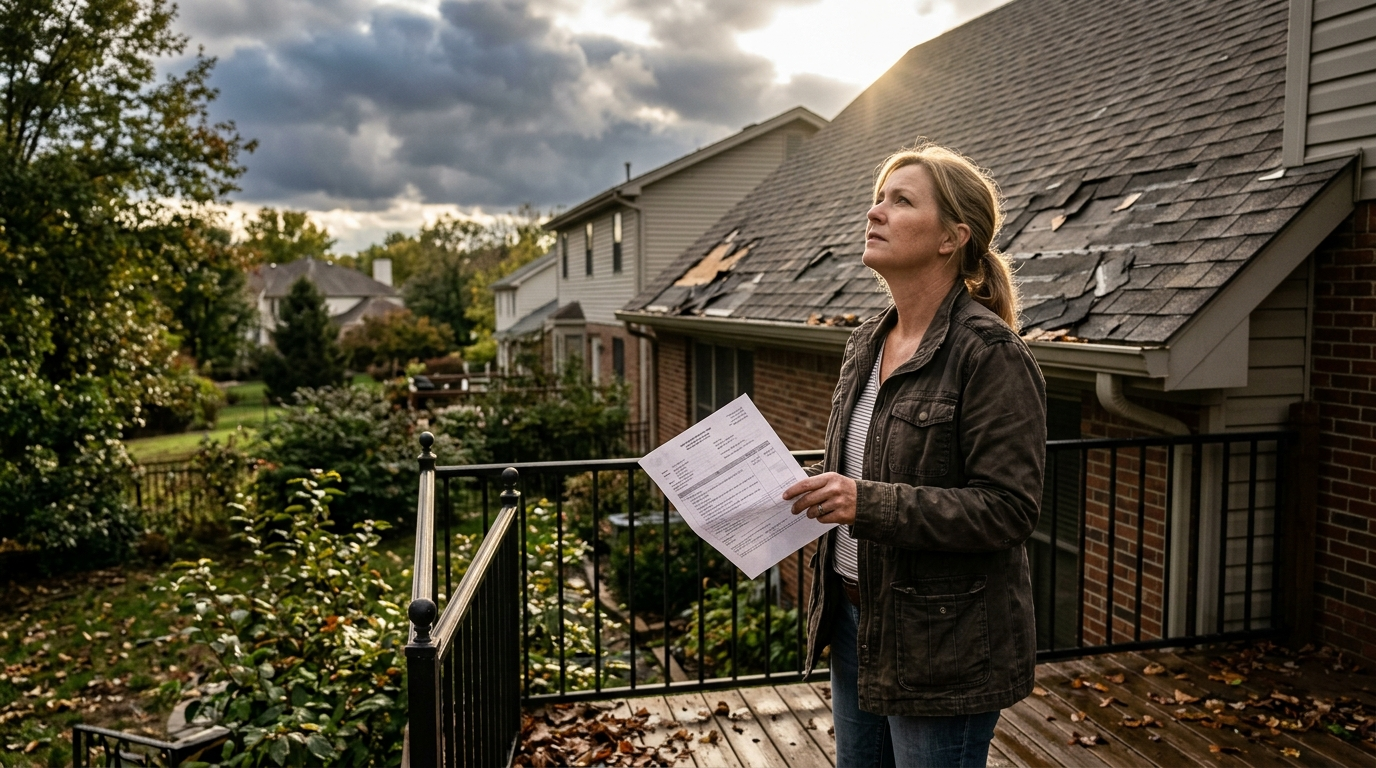
Missouri sees severe weather, including tornadoes, straight-line winds, and large hail, every single year. Many mobile home carriers apply a separate wind and hail deductible calculated as a percentage of your dwelling coverage rather than a flat dollar amount. On a home insured for $120,000 , a 5% wind/hail deductible means you pay the first $6,000 out of pocket before insurance pays anything. That is not always obvious when you buy the policy. Ask specifically about the deductible structure before you sign.
Trip or transit coverage
If you ever need to move your manufactured home from one location to another, your regular policy almost certainly does not cover it during transit. Trip coverage is a short-term endorsement that needs to be arranged separately before the move.
Land value
Your policy covers the structure and your belongings. It does not pay for the land underneath it if your home is on your own lot. This matters mostly for people trying to figure out whether they are carrying the right total coverage amount.
Lot rent liability (in park communities)
If you rent a lot in a mobile home community and your home causes damage to neighboring units or park infrastructure, your liability coverage needs to be written to address that exposure. Not all policies handle it the same way, and some park leases require specific minimum liability limits.
Missouri-specific factors that affect your coverage and cost
Missouri does not regulate mobile home insurance rates as tightly as it does auto insurance, so pricing varies more from carrier to carrier than residents sometimes expect. A few local factors push rates higher or lower:
- Location and tornado risk. Homes in open, rural areas of the state face higher wind exposure than homes in more sheltered locations. The western half of Missouri, including areas around Kansas City, sits squarely in a corridor that sees frequent severe weather.
- Home age and HUD compliance. Pre-1976 homes can be extremely difficult to insure at anything other than ACV, and some carriers will not write them at all. If your home is older, you may need a specialty insurer.
- Anchoring and tie-downs. Missouri adopted the HUD installation standards, and most carriers will ask about your anchoring system during underwriting. Documented compliance can help your rate and prevent a claim denial.
- Community vs. private land. Some carriers price park placements differently from homes on privately owned lots. Others will not write park placements at all, which is one reason working with an independent agent who can shop multiple carriers matters here.
- Credit score. Like most personal lines, your credit history affects what you pay for mobile home insurance in Missouri. Improving your score before shopping can make a real difference.
What to look for when comparing mobile home policies
If you are shopping for coverage or reviewing what you already have, compare these specifics side by side, not just the premium:
- RCV vs. ACV on the dwelling. This single choice can mean a difference of tens of thousands of dollars at claim time.
- Wind and hail deductible structure. Flat dollar vs. percentage, and what that percentage actually equals in dollars.
- Personal property basis. Is it RCV or ACV on your belongings?
- Liability limit. Is $100,000 really enough, given what lawsuits can cost?
- Flood and earthquake exclusions. Are you in a flood zone or close to a known fault risk? Do you have separate policies in place?
- Loss of use limit. How many months of living expenses will it actually cover?
- Carrier financial strength. Specialty insurers who write a lot of manufactured home business sometimes have thinner balance sheets than major carriers. Check AM Best ratings.
One more thing worth knowing: if you carry a mortgage on your manufactured home, your lender will require you to carry at minimum enough dwelling coverage to pay off the loan. That minimum is a floor, not a recommendation. In many cases it leaves you short of what you would actually need to rebuild or replace the home.
How mobile home insurance fits into your broader financial picture
Your home is likely your largest asset. For mobile home owners, that asset is also more directly exposed to weather than a site-built home, more dependent on proper installation and maintenance to stay insurable, and sometimes harder to finance and rebuild after a major loss because of how the manufactured housing market works.
That makes the relationship between your home policy and your other coverages more important, not less. If you also have vehicles, a boat, an RV, or other personal property, bundling those policies through the same carrier can improve your rate on all of them. You can read more about how bundling works in Missouri on our home and auto bundle guide. If your liability exposure extends beyond what your home policy can cover, a personal umbrella is the cleanest way to add a meaningful layer of protection above all of your underlying policies.
Get the right mobile home coverage for your Missouri property
Prime Insurance Agency is an independent agency, which means we are not tied to one carrier's products. We shop your mobile home insurance across multiple companies to find the combination of coverage and price that fits your situation, whether your home is in a Kansas City-area community, on your own rural land, or anywhere else in Missouri. We ask the questions about tie-downs, home age, flood exposure, and deductible structure that a direct carrier website will not walk you through. Call us at (816) 479-0595 or get a quote online and let us compare your options the right way.